


Your logins, your plans.
Each agent uses the sign-in its CLI already has. casm never asks for a provider API key and has no usage fees of its own.
 casm
Open source · Unopinionated · Self-hosted
A self-hosted web app and CLI for running Claude Code, Codex, OpenCode and pi across your own machines, on the subscriptions you already have.
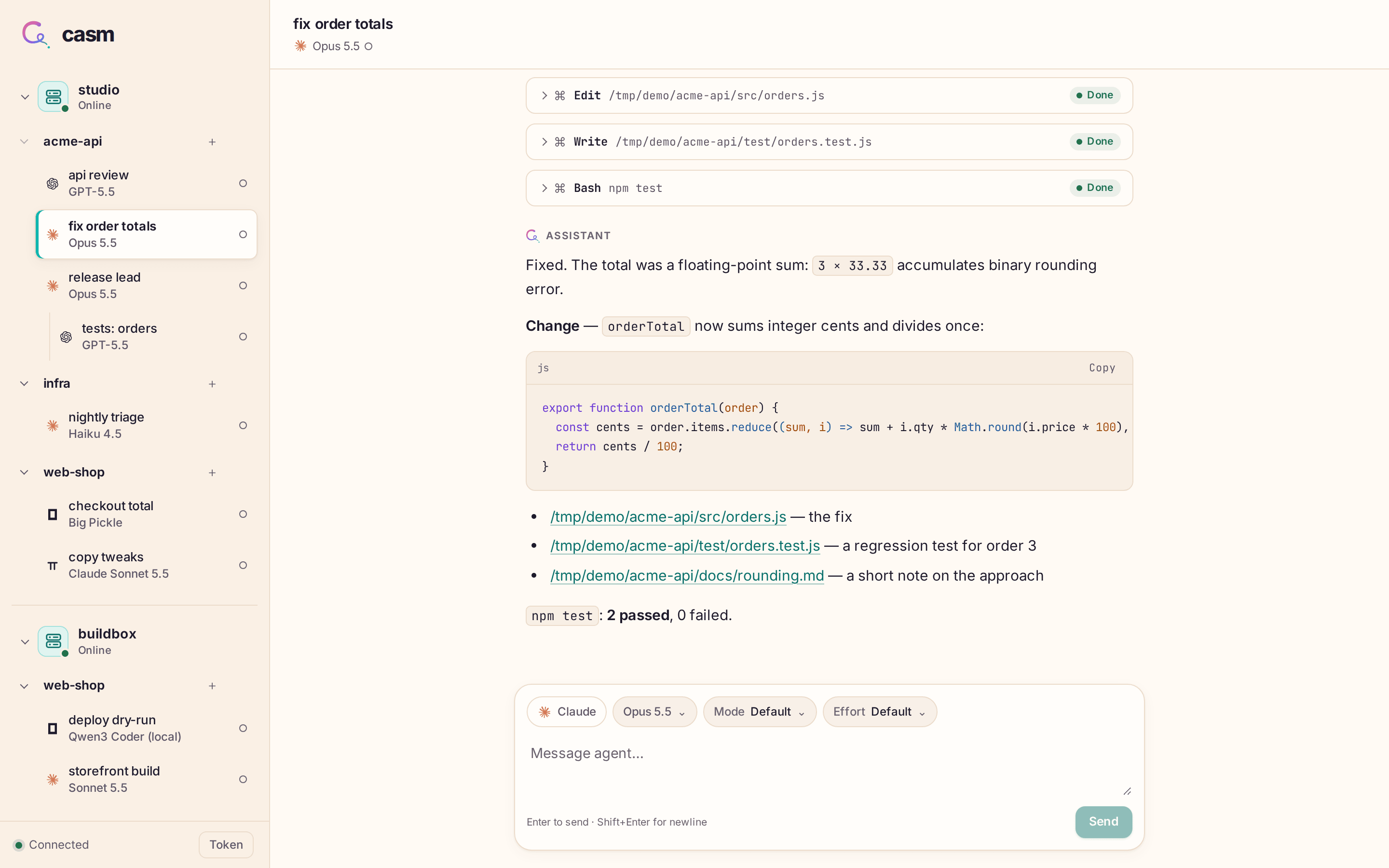
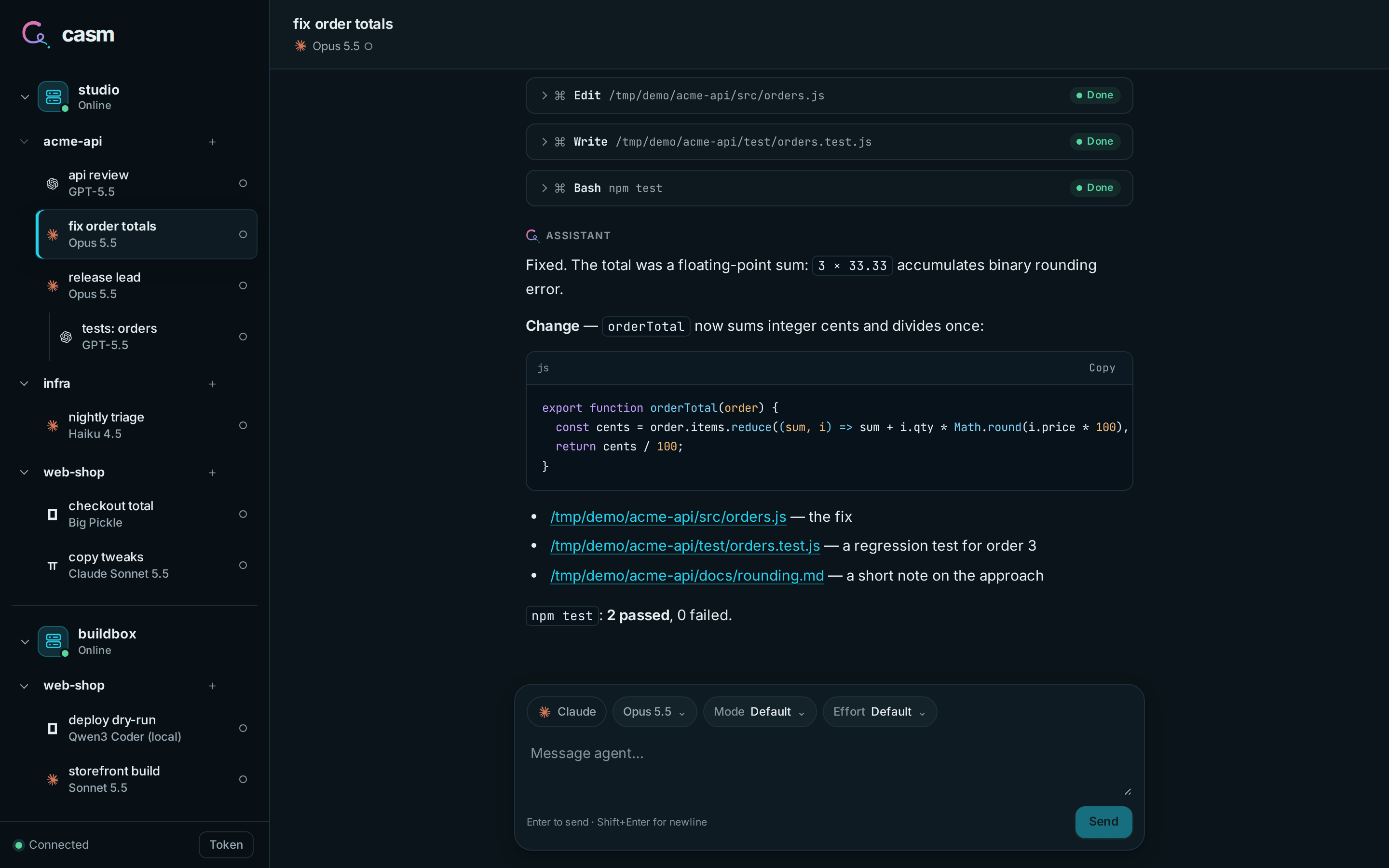
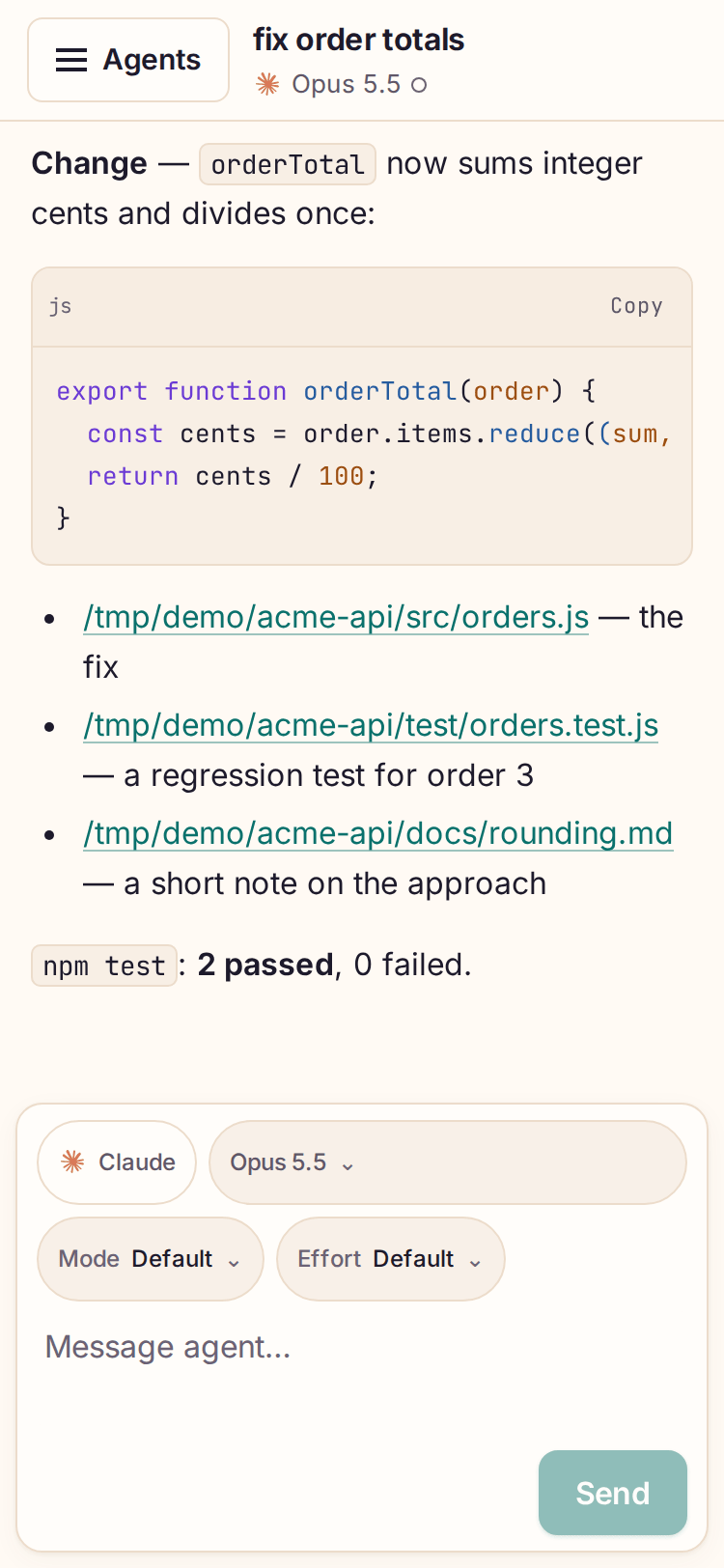
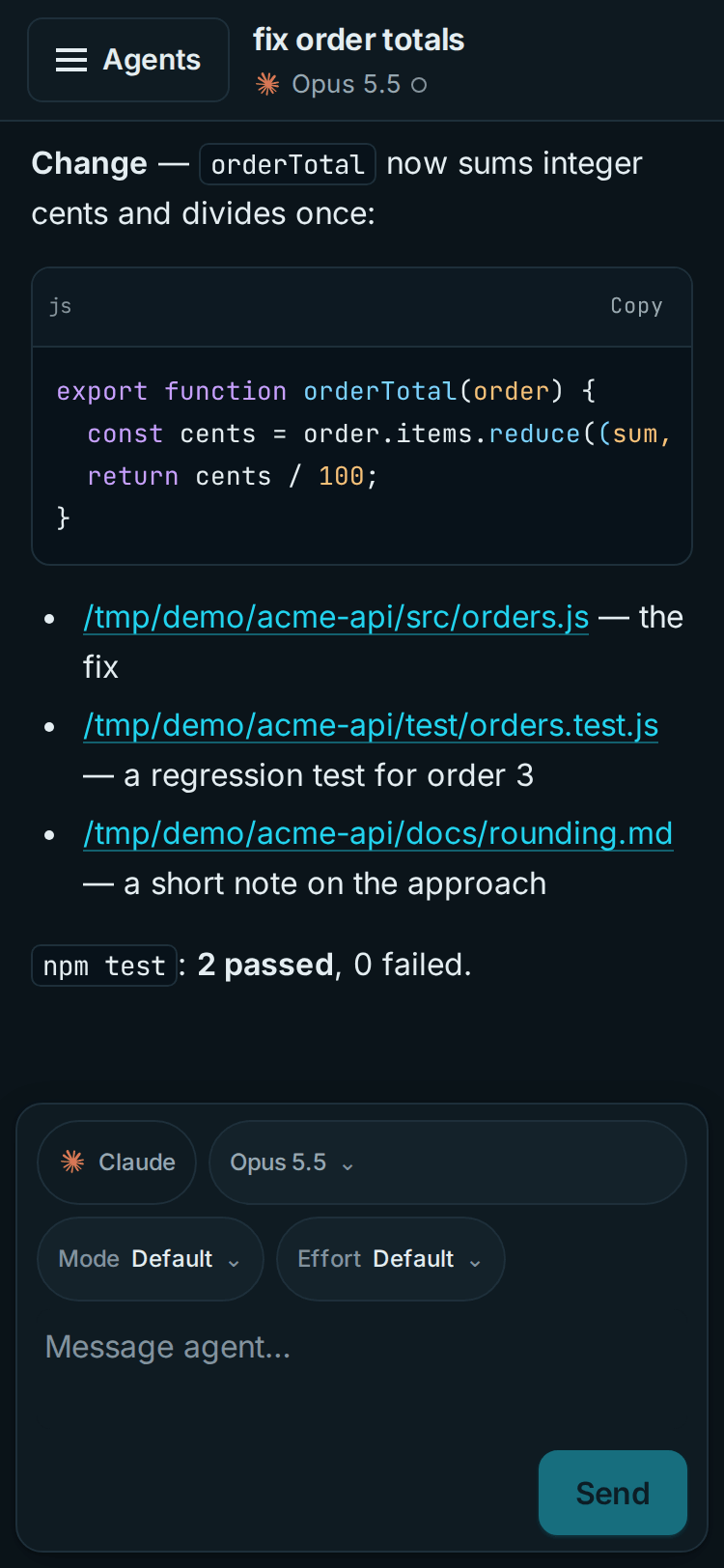
The actual casm web app with example projects, on desktop and phone.
The coding agents you already use, on your existing subscriptions.
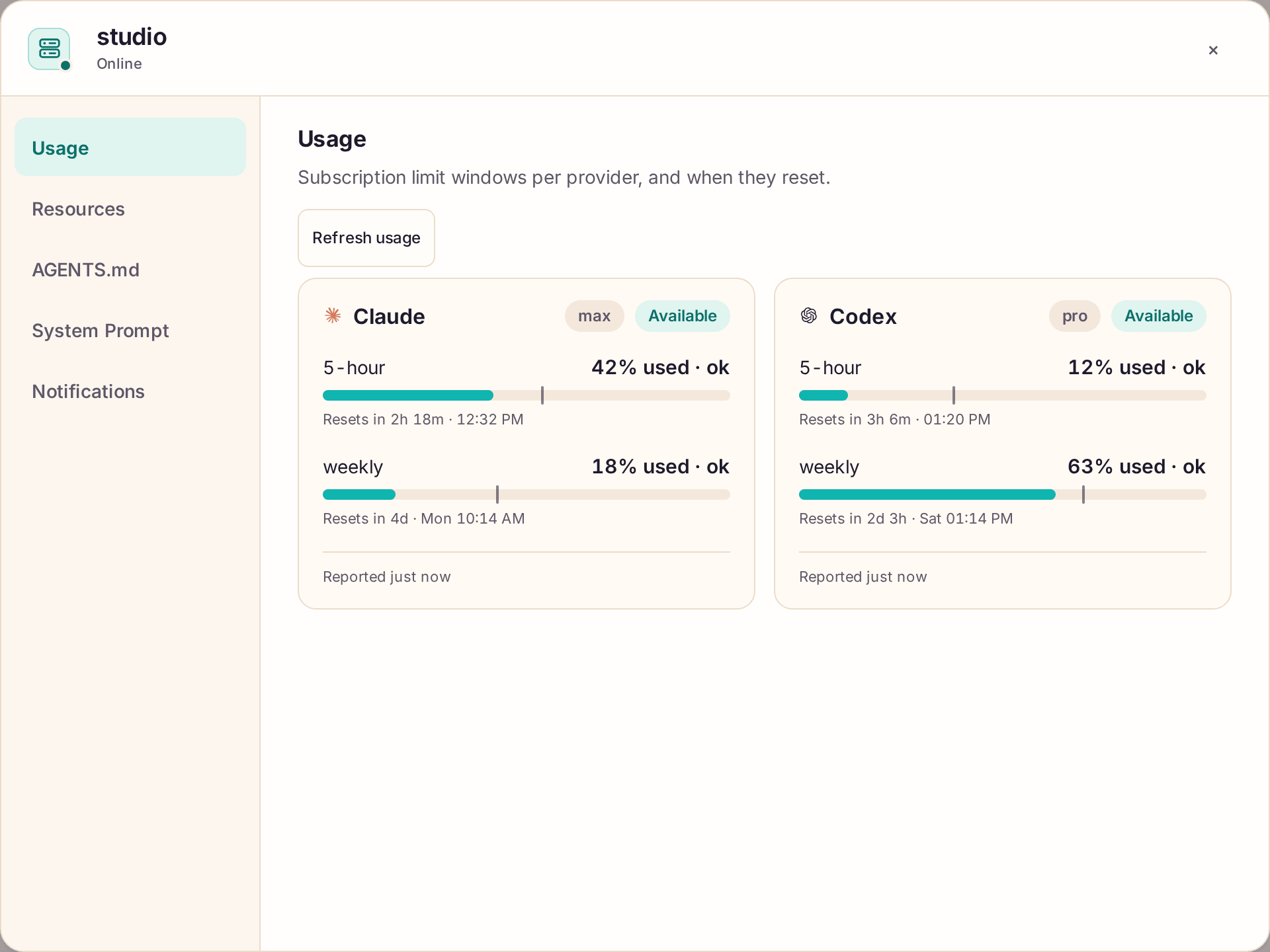
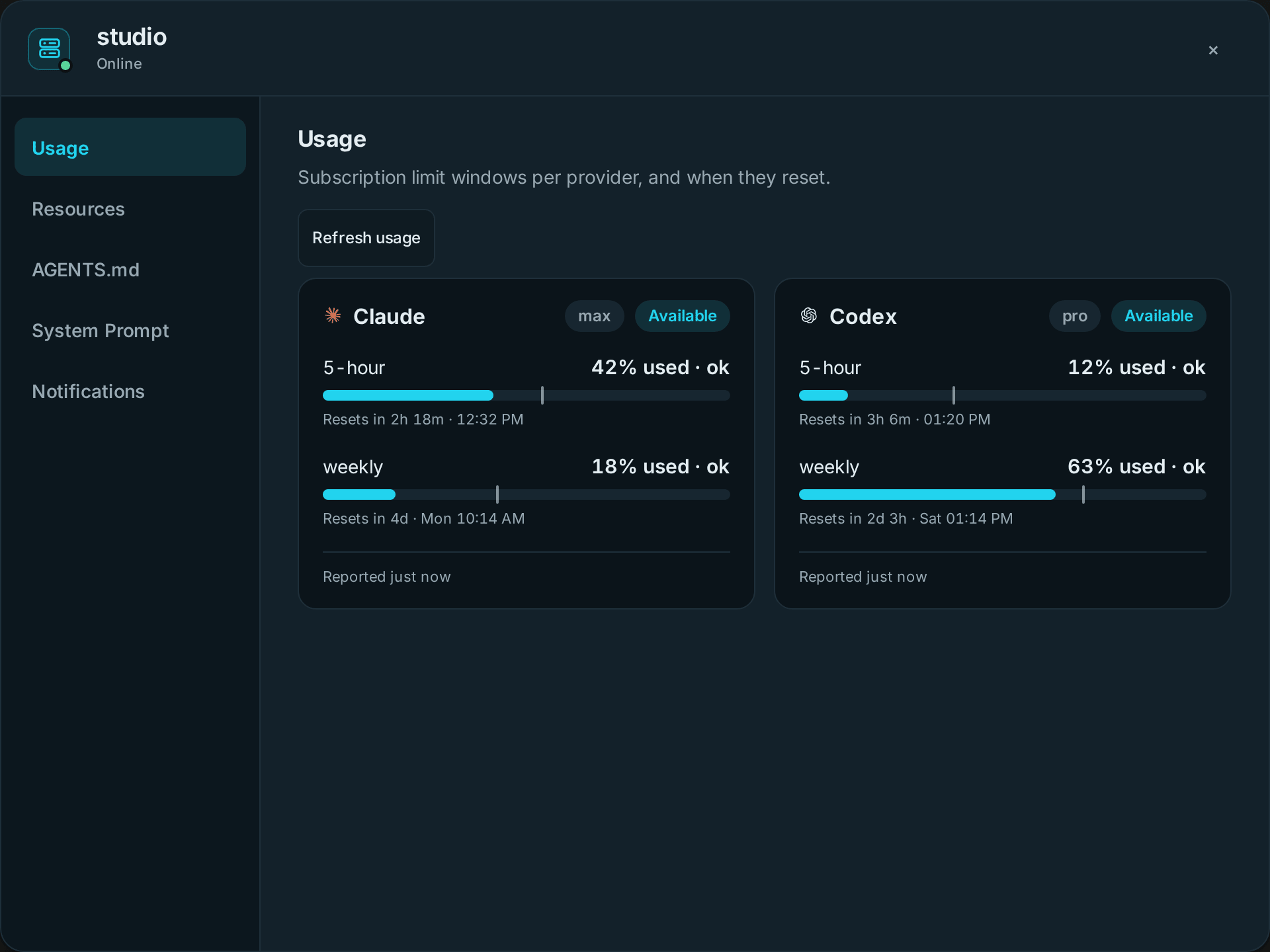
Each agent uses the sign-in its CLI already has. casm never asks for a provider API key and has no usage fees of its own.
Permission and question requests appear where you are and wait for you. Each provider keeps its own permission model.
Sessions started through casm live in the provider’s own store, so you can resume them directly in Claude Code, Codex, OpenCode or pi.
Self-hosted. One server per machine, connected as peers.
Connect hosts over a network you trust and send commands between them. No casm account, no relay, no telemetry.
Repositories, files and native sessions never leave their machine. Peers forward commands and events, not your code.
Close the browser and agents carry on. Queues, schedules and notifications run on the host, so keep that host running.
Two primitives and a few tools on top. No prescribed process.
Project is a directory.
Agent is a coding agent working in it.
What casm adds
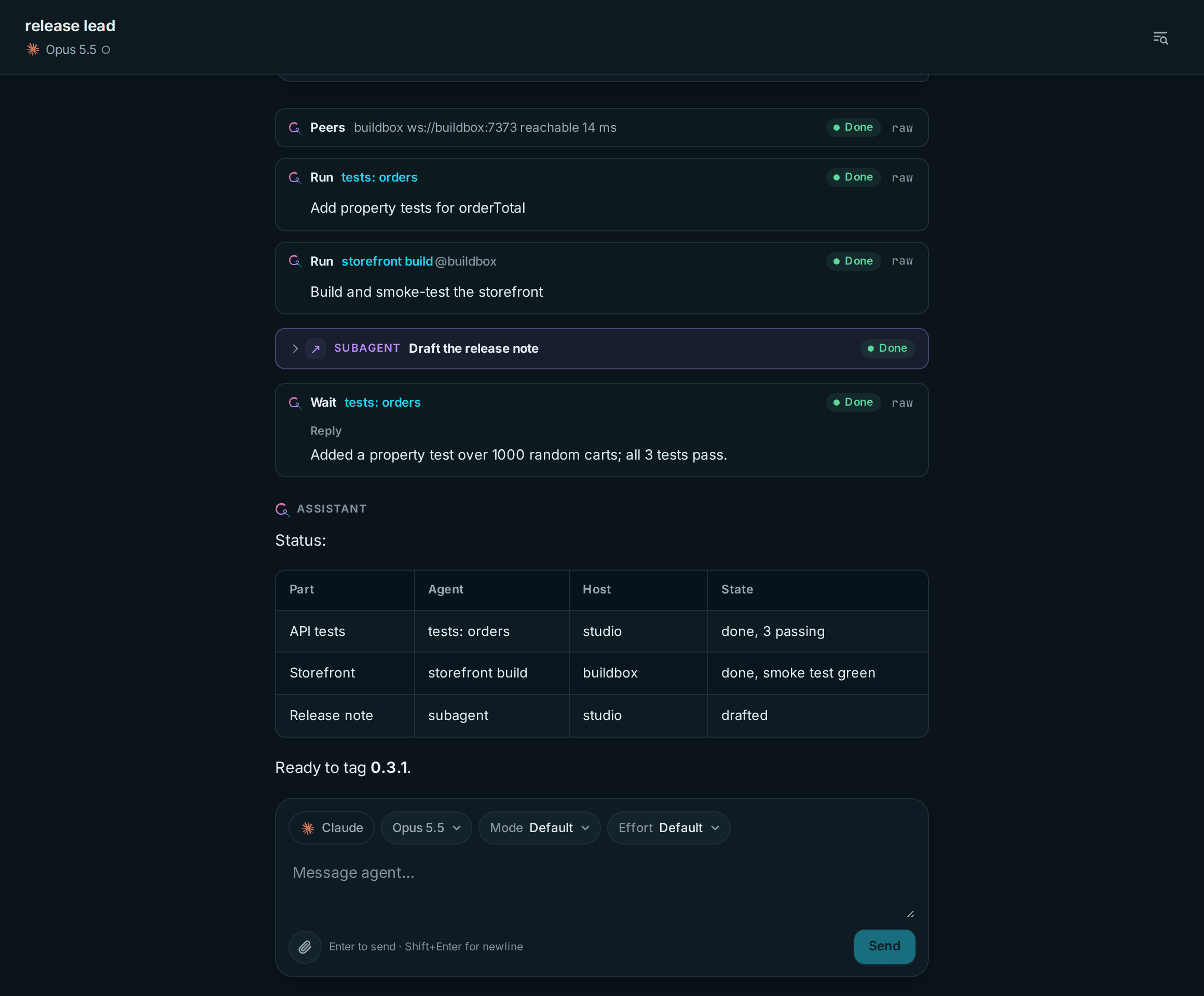
An agent can spawn others, message them, steer them and wait for the result. Same commands as yours.
casm run / send / waitAn agent can message itself, or another agent, later or on repeat.
casm schedule add --at "in 2h" --agent reviewer "Check the build"Sent only when an agent calls it, not on every reply.
casm notify "Deploy is waiting for your OK"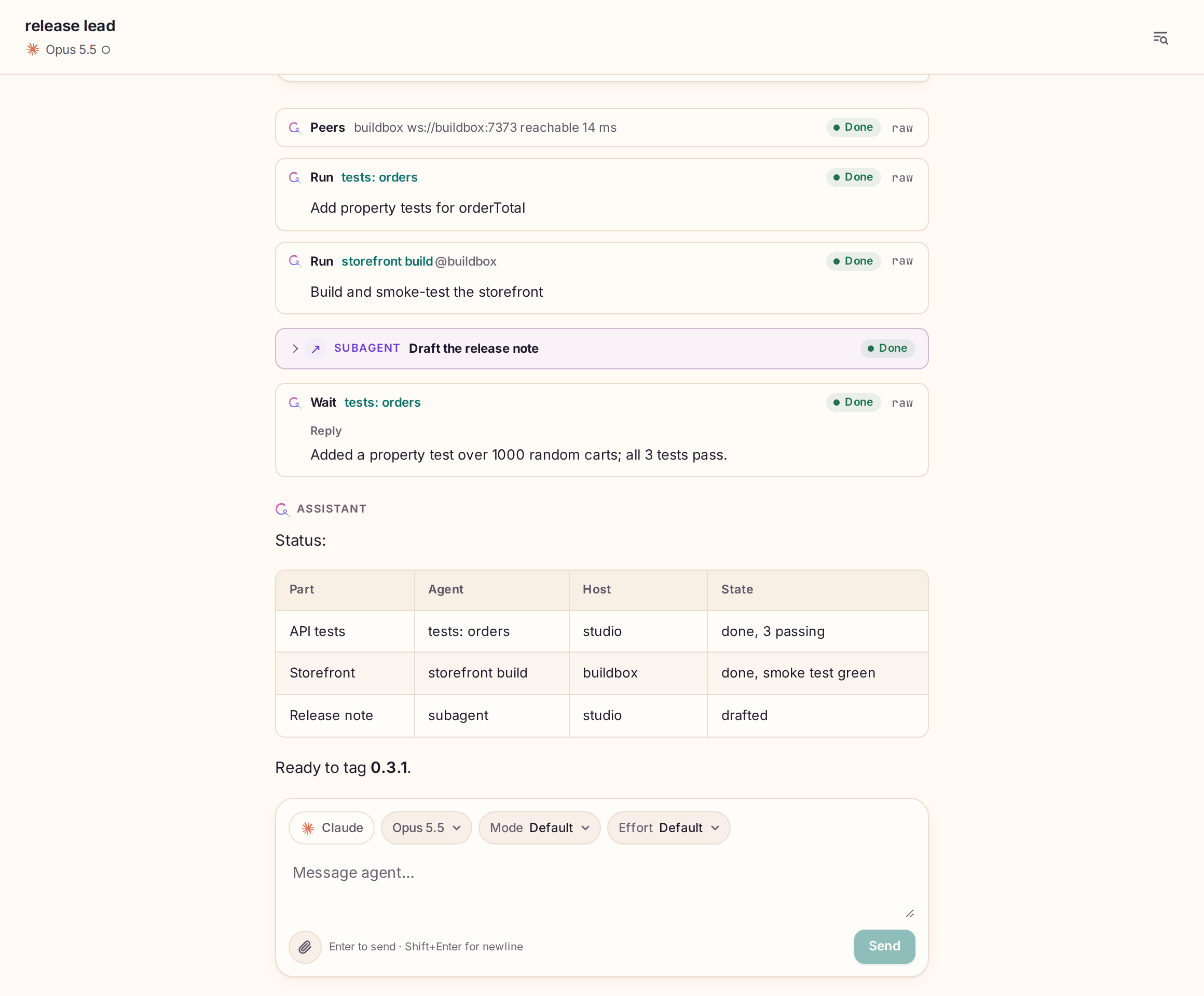
Linux or macOS with Node.js 24+. The package includes the server, CLI and web app. Install and sign in to your coding-agent CLIs separately; casm uses the ones it finds on PATH.
Run it in the background with casm service install. Prefer a source checkout? See the README.
npm install -g casm-cli
casm serve
In another terminal, run casm token create web. Open localhost:7373 and paste the token.
You run the casm servers, own their state, and choose the network. There is no required casm cloud or account. Your agents still connect to their configured model providers; optional push notifications use browser push services.
No. Peers forward commands and events. Repositories, files, and native provider sessions stay on their host. Use your existing Git and file-transfer workflow to prepare another machine.
Yes. The web app works on mobile and can be installed as a PWA. Connect to your host through a private network or an HTTPS proxy. Agents run on the host, not on your phone.
casm uses each provider’s permission model; it is not a sandbox. OpenCode and pi can connect to local models. pi has no built-in permission system. See the provider feature matrix for the differences.